
Vehicle on the road and shock absorber
Home / Technical Support / Failure Symptoms
Failure Symptoms

Spot the signs early. Stay safe on the road.

Shock absorbers wear gradually, so the change often goes unnoticed. If you experience any of the symptoms below, have your shock absorbers checked.

Why it matters

Wear progresses silently.

Shock absorber performance does not drop overnight; it declines over thousands of kilometres, and drivers get used to the change. Yet a worn shock absorber lengthens braking distance, reduces road holding and causes tyres to wear faster.
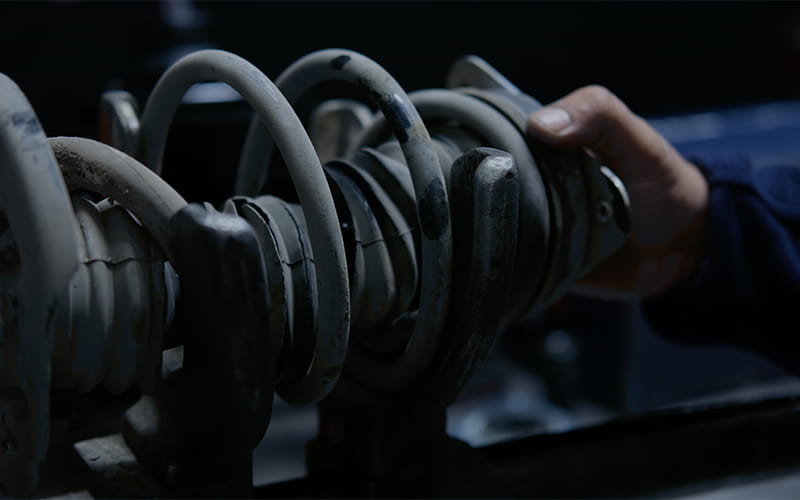

Checking a worn shock absorber
What to look out for

8 signs your shock absorbers need replacing

  • 01

    Oil leaks and body damage

    Wet oil traces, dents or rust on the body may mean the seal is leaking or the body is damaged.

  • 02

    Excessive bouncing

    If the vehicle bounces up and down several times after a bump and is slow to settle, the shock absorber is no longer damping properly.

  • 03

    Nose-diving under braking

    The front of the vehicle dips noticeably when braking, or the rear squats when pulling away.

  • 04

    Body roll in corners

    The body leans excessively in corners, or the vehicle drifts when changing lanes or in crosswinds.

  • 05

    Uneven tyre wear

    Wavy, patchy (cupped) wear on the tread shows the wheel is not keeping constant contact with the road.

  • 06

    Knocking and rattling

    Noises from the suspension on rough roads may point to a problem with the shock absorber or its mounting parts (mounts, bushes).

  • 07

    Longer braking distance

    As the wheels lose contact with the road, the vehicle takes longer to stop than before.

  • 08

    Reduced road holding

    The vehicle feels as if it is "floating" at high speed, or there is vibration or wobble in the steering.

Visual inspection of a shock absorber Check every 20,000 km
Quick check

Check your shock absorbers yourself

These checks give you an idea; for a definitive diagnosis, always have your shock absorbers tested at a workshop.

  1. 01

    Visual check

    Look for oil traces, dents or rust on the body, and for tears in the dust boot and mounts.

  2. 02

    Bounce test

    Push down firmly on one corner of the vehicle and let go. It should rise once and settle. If it bounces more than once, the shock absorber may be worn.

  3. 03

    Visit a workshop

    Have your shock absorbers tested at a workshop for a definitive diagnosis.

When it’s time to replace

What to keep in mind when replacing

Follow these points so your new shock absorbers deliver full performance and remain covered by the warranty.

Installation Guide
  • Replace, don’t repair. A repaired shock absorber cannot guarantee safe driving.
  • Replace shock absorbers on the same axle in pairs. A difference between left and right impairs road holding.
  • Renew the mounting parts. Reusing old mounts, bushes and dust boots is not covered by the warranty.
  • Get a wheel alignment. Wheel alignment should be checked after replacing the front shock absorbers.

Find the right shock absorber for your vehicle.

Search by vehicle model or OE number, and find your nearest dealer.